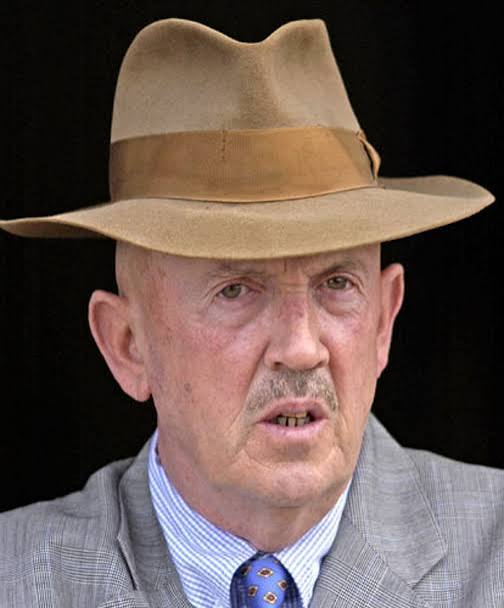
Who was Barney Curley?
Barney Curley was an Irish professional gambler, racehorse trainer, owner and philanthropist whose carefully prepared betting operations became part of racing folklore. He is most closely associated with the Yellow Sam coup at Bellewstown in 1975, although that famous gamble was only one chapter in an unusually varied life.
Curley was not a computer modeller in the style of Bill Benter, nor primarily a public high-stakes personality like Harry Findlay. His edge came from judgement, preparation, secrecy and patience. He studied how horses were placed, how bookmakers reacted to information and how emotion damaged the decision-making of ordinary punters. When circumstances were wrong, he waited. When he believed the market was wrong, he acted with conviction.
At a glance
Born in County Fermanagh in 1939, Curley trained for the priesthood, worked in business and music management, became one of racing's most feared punters, trained horses near Newmarket and used his later life to support education and health projects in Zambia.
Early life and formative lessons
Bernard Joseph Curley was born on 5 October 1939 in Irvinestown, County Fermanagh. He grew up as one of six children in a family where money was limited and a person's word mattered. Accounts of his youth repeatedly return to the influence of his father, whose experiences with gambling helped shape Curley's determination to understand risk rather than be controlled by it.
Curley attended Mungret College and intended to become a Jesuit priest. Tuberculosis interrupted that path and he spent months in hospital. The episode ended his planned religious vocation, but the habits associated with that period—discipline, self-examination and moral seriousness—remained visible throughout his life.
Before racing became central, he ran a bookmaker's shop and a pub and worked in music management. Those ventures taught him about crowds, persuasion, organisation, cash flow and the consequences of poor judgement. He later said that an early large racing win disappeared quickly while he was drinking. The lesson was severe and lasting: alcohol, emotion and professional gambling did not mix.
Becoming a professional gambler
Curley did not approach racing as a search for a magical system. He regarded it as a market in which patient, informed people could occasionally find prices that did not reflect a horse's true chance. That required more than reading a racecard. It meant understanding fitness, temperament, ground, distance, handicap marks, race planning and the behaviour of other bettors.
The betting world of the 1960s and 1970s was far slower than today's online market. Communications between shops and racecourses were limited, and an informed individual could sometimes act before the wider industry understood what was happening. Curley became skilled at identifying those temporary information gaps.
He also knew that a good opinion could be ruined by poor execution. A heavy early bet might advertise the information and destroy the price. His major gambles therefore depended on trusted runners, carefully timed instructions, multiple betting outlets and secrecy until the final minutes.
The Yellow Sam coup
The most famous day of Curley's betting career came at Bellewstown in June 1975. The target was Yellow Sam, a horse whose previous form offered little obvious encouragement to the public. Curley believed the horse was capable of considerably better in the Mount Hanover Amateur Riders Handicap Hurdle.
The plan exploited Bellewstown's limited communications. Off-course bookmakers who accepted bets would normally contact representatives at the track so they could back the horse and shorten its starting price. At Bellewstown, communication depended heavily on a public telephone. Curley's associate occupied that telephone while pretending to speak to a seriously ill relative, preventing urgent calls from getting through at the crucial moment.
Meanwhile, runners entered betting shops across Ireland and placed stakes shortly before the race. Their instructions were tightly controlled so the target could not leak early. Reports commonly put the total stake at a little over IR£15,000.
Yellow Sam started at 20-1 and won by two and a half lengths. The reported profit was about IR£300,000, an extraordinary sum at the time. The bookmakers had to honour the bets because the wagers were valid and the race had been won fairly.
Why it worked
- The horse's public form concealed Curley's confidence.
- The race was chosen at a course with weak communications.
- Numerous bets were placed almost simultaneously.
- The public telephone was occupied while bookmakers tried to manage liabilities.
- The market had too little time to react.
The coup made Curley famous, but fame was not entirely useful. Bookmakers watched horses connected with him, and any sign of his money could shorten a price immediately. Future operations had to become subtler and more dispersed.
Later betting coups
Yellow Sam was the most memorable Curley gamble, not the last. Over the following decades, horses linked to him repeatedly attracted dramatic late support. The general pattern remained consistent: horses prepared patiently, placed in suitable races and backed through a network rather than one conspicuous account.
In May 2010, a series of strongly supported horses associated with Curley's circle won and reportedly cost bookmakers more than £1 million. Four years later, four horses with links to him won on the same afternoon. Contemporary estimates suggested an industry loss in the region of £2 million, although exact figures were never independently verified.
These later gambles occurred in a more sophisticated environment with centralised trading teams, instant communications and automated price changes. Curley's continued ability to surprise the market showed that his advantage did not depend solely on an old telephone trick. It rested on planning, timing, dispersed execution and a deep understanding of racing.
Betting strategy and psychology
Curley's philosophy can be reduced to demanding principles: know more than the market, wait for a genuine price, stake with discipline and never let a previous result dictate the next decision.
Value rather than winners
A horse can win at a bad price and lose at a good one. Professional betting is not judged by one result. The relevant question is whether the odds taken were greater than the true probability. A bettor who repeatedly secures value can survive losing runs; one who repeatedly accepts poor prices eventually runs out of money.
Patience
Recreational gamblers often feel pressure to bet because a race is about to start. Curley could wait for days or weeks. That patience protected capital and prevented boredom from becoming a staking strategy.
Information and placement
He looked beyond bare results. Was the distance unsuitable? Was the ground against the horse? Had it needed the run? Had a future target been chosen? Ordinary efforts could create a favourable handicap mark and a generous price when conditions finally suited.
Emotional control
Curley warned against chasing losses. A losing bet does not make the next horse more likely to win, and increasing stakes from frustration converts a normal setback into a threat to the entire bankroll.
Racehorse training career
Curley became a licensed trainer in the 1980s and trained until the early 2010s, first in Ireland and later near Newmarket. Training gave him control over variables he had spent years assessing from the outside: fitness, race selection, equipment, schooling and the timing of a campaign.
His approach was patient and target-driven. He was not trying to maximise runners or chase every prize. He preferred to understand an individual horse, protect its confidence and wait for circumstances in which it could perform effectively.
Curley's stable also influenced younger racing professionals. Frankie Dettori and Tom Queally were among jockeys connected with him early in their development. Although his training record was respectable, raw winner totals do not explain his importance. His name in a race changed the way bookmakers and experienced bettors interpreted the market.
Direct Aid for Africa
The defining change in Curley's later life followed the death of his 18-year-old son, Charlie, in a car accident in 1995. After visiting Zambia, Curley was deeply affected by the poverty, illness and limited opportunities he encountered. He founded Direct Aid for Africa, usually known as DAFA, to channel practical help directly to communities.
The charity supported schools, health facilities, food programmes, clean-water projects, vocational training and housing for teachers and medical workers. Curley brought the same intensity to fundraising that he had brought to racing, persuading owners, trainers, jockeys and bookmakers to contribute.
Over time, the charity raised millions and helped thousands of people in Zambia. Curley's public identity gradually changed. Journalists still asked about Yellow Sam, but he increasingly wanted to discuss classrooms, hospitals and children whose prospects had improved through education.
A different measure of success
Curley won money from bookmakers, but his most important legacy was what he did with his time, influence and resources afterwards. DAFA turned racing connections and fundraising energy into long-term educational and health projects.
Career timeline
- 1939Born in Irvinestown, County Fermanagh.
- 1950s–1960sStudies for the priesthood, recovers from tuberculosis and works in business and music management.
- 1975Yellow Sam wins at Bellewstown, completing Curley's most famous coup.
- 1980sBecomes established as a racehorse trainer.
- 1995His son Charlie dies in a car accident.
- 1996 onwardDevelops Direct Aid for Africa after visiting Zambia.
- 2010Horses linked to Curley's circle land a heavily backed multiple gamble.
- 2014Four strongly backed horses linked to Curley win on one afternoon.
- 2021Dies at his home near Newmarket, aged 81.
Comparison with other professional punters
| Punter | Primary edge | Best known for |
|---|---|---|
| Barney Curley | Race planning, secrecy, timing and value | Yellow Sam and later coups |
| Alex Bird | Race reading and photo-finish judgement | Calling close finishes |
| Phil Bull | Time analysis and ratings | Founding Timeform |
| Bill Benter | Statistical modelling | Hong Kong computer betting |
| Zeljko Ranogajec | Data, scale and rebates | Industrial global wagering |
| Harry Findlay | Strong opinions and aggressive staking | Major public bets |
Legacy
Barney Curley's place in racing history rests on three connected achievements. He became one of the most respected professional punters of his era, proved himself as a trainer and horseman, and transformed personal loss into sustained charitable work.
The Yellow Sam coup remains irresistible because it has every element of a racing legend: a hidden horse, a small country course, runners waiting in betting shops, a telephone occupied at exactly the right moment and a 20-1 winner. Yet Curley's true achievement was not a trick with a phone box. It was the ability to bring judgement, planning and execution together under pressure.
Modern technology has removed many market weaknesses he exploited, but his principles remain relevant. Do not confuse action with opportunity. Do not chase. Do not reveal information unnecessarily. Understand the price as well as the horse. Accept that losing is part of betting. Above all, have the discipline to wait.
When Curley died on 23 May 2021, obituaries remembered a betting mastermind, but also the schools, health projects and opportunities created through DAFA. That combination made him unique: a man famous for taking money from bookmakers who ultimately wanted to be remembered for giving something back.
Frequently asked questions
Who was Barney Curley?
An Irish professional gambler, trainer, owner and philanthropist, born in 1939 and best known for the Yellow Sam coup.
What was the Yellow Sam coup?
A coordinated 1975 betting operation at Bellewstown. Runners placed bets across Ireland while the course telephone was occupied, delaying bookmakers' response. Yellow Sam won at 20-1.
How much did he win?
Reports commonly state that roughly IR£15,000 was staked and about IR£300,000 was won, although details vary slightly between accounts.
What was his betting strategy?
Patience, race planning, value prices, controlled information, disciplined staking and emotional control.
Was he a racehorse trainer?
Yes. He trained from the mid-1980s until the early 2010s, operating for many years near Newmarket.
What was Direct Aid for Africa?
The charity Curley founded to support education, health care and practical community projects in Zambia.
What was his net worth?
No reliable, independently verified figure is available. Betting winnings alone are not enough to calculate personal wealth accurately.
Sources and further reading
- Greg Wood, Barney Curley obituary, The Guardian, May 2021.
- Barney Curley with Nick Townsend, Giving a Little Back.
- Bellewstown Racecourse material on the Yellow Sam coup.
- Direct Aid for Africa information on projects in Zambia.